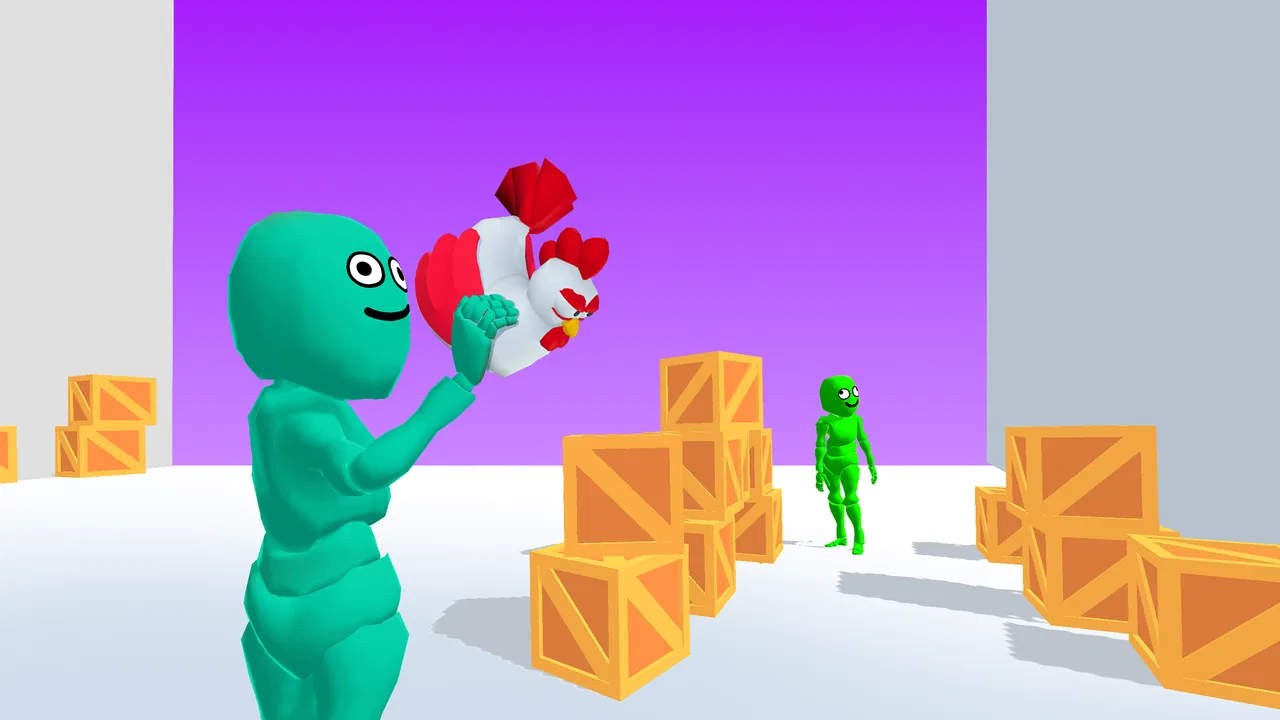
Who Dies Last?
- 4.6
- Rating
- 50.00M
- Installs
- Free
- Price

 Analysis by App-foxy
I picked up Who Dies Last? expecting a quick casual game, and that is exactly where it works best: short bursts of stickman ragdoll fighting built around timing, positioning, and a generous collection of weapons. It is made by CASUAL AZUR GAMES and sits in the kind of mobile category that is easy to understand within seconds but still gives you reasons to replay a stage when your first attempt goes badly.
The basic appeal is wonderfully direct. You enter a fight, try to hit the opposing buddy, and use the environment and available arsenal to stay alive longer than the other side. The store summary describes it as a ragdoll stickman fighting game with an unlimited arsenal, while the short store line asks, “Who Dies Last?” That gives you a clear idea of the mood: this is playful cartoon combat rather than a serious fighting simulator.
After spending time with it, I see the game as a good fit for people who want immediate action without learning a large roster of characters or a complicated control system. It is less suitable if you are looking for a deep competitive fighter, a story-heavy adventure, or a carefully balanced game built around long sessions. Its strength is the quick laugh and the satisfying chaos of a well-timed hit.
You May Also Like

 Blood Strike: 2.5 Anniversary
Blood Strike’s Loadouts Turn Every Drop Into a Tactical Gamble
A close look at Blood Strike’s custom loadouts: how fast access to signature weapons reshapes its battle royale rhythm, rewards preparation, and narrows the gap between fights.

 Pandora - Music & Podcasts
Pandora’s Music Is Easy to Start, but Harder to Recover
Pandora’s strength is its low-effort path from a seed to a station. Its weak spot is how much confidence it asks you to place in connection, setup, and quiet recovery.

 8 Ball Pool
 Is Built on Rivalries, Rematches, and Routine
A close look at the rivalries, rematches, shared routines, and unanswered safety questions that turn a quick pool match into a persistent mobile community.

 Samsung Music
’s Quiet Strength Is Playing What You Already Own
Its reach comes less from spectacle than from dependable access to a personal library. That simplicity is both the app’s strongest retention engine and its ceiling.

 AccuWeather: Weather Radar
AccuWeather Review: A Quick, Clear Forecast for Everyday Decisions
For everyday plans, the best forecast is the one you can understand quickly. AccuWeather makes rain timing, radar, and local conditions easy to act on, with a few trade-offs.

 Hill Climb Racing
Why Hill Climb Racing Still Turns Crashes Into One More Run
A tiny car, a bumpy hill and one more upgrade: Hill Climb Racing keeps resurfacing because its simple chaos makes every near-miss feel personal.
More From Our News Desk
View All News


How the game feels in everyday play
The first thing I noticed is how quickly a match communicates its objective. There is no need to study a long tutorial before understanding what matters. You are watching the stickman bodies move, looking for a safe opening, and trying to make your next attack count. The ragdoll presentation gives every collision a loose, unpredictable quality, so even a simple encounter can end in a way that feels different from the previous one.
That unpredictability is important because it stops the game from feeling like a button-mashing exercise. A weapon may look useful, but the real question is whether you can use it at the right moment without exposing yourself. I found myself paying attention to spacing rather than simply attacking whenever an option appeared. Waiting briefly can be more effective than rushing, especially when both characters are moving awkwardly or recovering from a hit.
My favorite way to play is in small sessions. If I have a few minutes while waiting for an appointment or need a quick break between tasks, the game is easy to open and understand. It does not demand the same commitment as a traditional fighting game, and that makes it more approachable when I want entertainment rather than a serious challenge.
There is also a useful distinction between the game’s visual simplicity and its moment-to-moment decision-making. The stickman style keeps the screen readable, but the ragdoll physics can create situations where a character’s body position matters as much as the weapon itself. A hit that looks obvious may miss because the opponent is falling or moving away, while a less dramatic attack can connect because the timing is better.
Why timing matters more than frantic tapping
One practical tip is to watch the opponent’s movement before committing to an attack. New players may be tempted to use every available opportunity immediately, but the loose physics reward patience. I had better results when I treated each encounter as a short timing puzzle: identify where the opponent is likely to land, choose the moment that gives the attack the clearest path, and avoid placing my own character in a bad position.
A second useful habit is to think about recovery. In a ragdoll game, the hit itself is only part of the exchange. What happens immediately afterward can decide the result. If your character is thrown into an awkward position, the next move may be defensive rather than aggressive. This is one of the reasons the game remains entertaining after the novelty of the weapons wears off; the physics create small decisions that are easy to miss if you only focus on attacking.
I also recommend changing your approach when a particular weapon or encounter is not working. Repeating the same move can make a difficult situation feel unfair, but switching timing or distance often produces a better result. That trial-and-error loop is a genuine part of the game’s value, even though the controls and presentation remain casual.
What the arsenal adds to the experience
The large arsenal is not merely a visual attraction. It gives the game its variety and encourages experimentation. Different weapons change how I think about distance, timing, and risk. Some situations invite a direct hit, while others make it smarter to wait until the opponent is exposed. The fun comes from discovering which option suits the current movement rather than assuming that the most dramatic-looking choice is automatically the best one.
There is a trade-off here. An extensive selection can make the game feel fresh, but it can also reduce the sense of mastery found in a smaller, tightly balanced fighting system. I do not approach this title expecting every weapon to have the precision of a competitive fighter’s move set. Instead, I judge each one by whether it creates an amusing or useful interaction in the current battle.
That makes it particularly good for casual players who enjoy experimenting. You can set yourself small goals, such as winning through better positioning or learning to wait for a more favorable opening. Those goals add structure when you have already understood the basic controls but still want a reason to keep playing.
Cost, value, and the compromises behind the free download
The game is free to download, which makes trying it straightforward. Its store information lists in-app purchases ranging from $2.99 to $6.99 per item. I would therefore treat the free access as the starting point rather than assuming that every part of the experience has the same value without spending. The sensible approach is to play first, decide whether the core fights hold your attention, and only then consider whether an optional purchase improves your personal experience.
That distinction matters because the game’s main appeal is already visible without a financial commitment: quick ragdoll battles, simple objectives, and weapon-based experimentation. If you only want an occasional distraction, the free entry point may be enough. If you become invested in collecting or extending the experience, the purchase range gives you a clear spending boundary for individual items, but I would still avoid buying impulsively before knowing how often you will return.
In value terms, the game delivers best when you enjoy replaying small challenges rather than needing a substantial campaign. It is not trying to replace a full console fighting game. Instead, it offers a lighter alternative for moments when you want immediate interaction and a playful result. That makes the free model useful for sampling, while the optional purchases should be judged by how much additional enjoyment they provide to a regular player.
One of the less obvious value questions is whether you enjoy failure caused by physics. A missed attack or awkward fall can be funny when you are in the right mood, but it can also feel irritating if you want every defeat to be explained by precise input. I consider that uncertainty part of the price of admission, even when admission costs nothing. The game’s charm depends on accepting that not every outcome will look perfectly controlled.
The audience response suggests that many players find the concept appealing. The game has an average rating of 4.6 from around 38 thousand ratings, with roughly 1.4 thousand written reviews and more than 50 million installs. Those figures do not guarantee that it will suit everyone, but they do show that the simple stickman-fighting idea has reached a broad mobile audience.
Where it differs from ordinary casual alternatives
Compared with a standard endless runner, this game gives you more direct interaction with an opponent. You are not only reacting to a scrolling path; you are choosing when to attack and how much risk to accept. Compared with a puzzle game, it gives you less certainty and more physical comedy. A puzzle usually rewards finding the correct solution, while this game often rewards adapting when the bodies and attacks do not behave exactly as expected.
Against a traditional mobile fighting game, however, it is much lighter. You should not choose it if your priority is a deep combo system, highly technical character matchups, or a serious ranked competition experience. Its appeal is closer to a toy box of combat situations. That is a strength for short sessions, but a limitation for players who want long-term precision training.
It also differs from multiplayer-focused casual games because the central pleasure is not necessarily social competition. The game’s design works even when you simply want to test your timing against the immediate challenge in front of you. If your main reason for playing is communicating with friends or building a persistent team, another category will probably serve you better.
Small frustrations that affect the recommendation
The ragdoll physics are entertaining, but they can make outcomes feel less predictable than in a conventional fighter. I sometimes enjoyed that uncertainty, especially when a battle ended in an absurd way. At other times, I wanted a little more control over the character’s recovery and positioning. This is not a flaw that can be separated from the concept; it is the same system that creates the game’s funniest moments.
The casual structure can also become repetitive for players who need constant progression or a strong narrative reason to continue. The weapons and encounters provide variation, but the central loop remains focused on hitting the opponent and surviving the exchange. If you prefer games with a large story, detailed character development, or a steadily expanding world, this may feel thin after the initial novelty.
Another limitation is the difference between accessibility and depth. The game is easy to pick up, but that does not mean every result feels fully within your control. Someone who enjoys learning exact systems may find the physics too loose, while someone who wants a quick laugh may find that looseness ideal. I would make that expectation clear before recommending it to a friend.
The age rating is Everyone 10+, so I would still consider the tone before handing it to a younger child. The presentation is stylized and built around stickman action, but the central activity is fighting. For families, the rating is a useful starting point, while individual comfort with cartoon combat should guide the final decision.
The game is listed with a minimum operating system of Android 7.0, and the current version is 7.1. If you are installing it on an older device, checking compatibility before planning to play is sensible. On a suitable phone, the important practical question is not whether the game is technically complex, but whether the screen and controls feel comfortable enough for quick timing decisions.
Who will get the most from it
I would recommend this game to someone who enjoys short, repeatable challenges and does not mind a little unpredictability. It is especially suitable for players who like trying different weapons, watching exaggerated physics, and improving through observation rather than studying a long rulebook. The free download makes it easy to test that fit without committing money first.
A realistic everyday scenario would be a short commute or a ten-minute break. You can play a few encounters, experiment with a different attack style, and stop without feeling that you have abandoned a long story mission. It also works well as a shared screen distraction when friends want to compare reactions or laugh at an unexpected ragdoll outcome, although I would not mistake that for a full social game.
It may also suit parents looking for a simple game to evaluate together with an older child. The controls and objective are easy to explain, and the cartoon presentation keeps the tone lighter than a realistic combat title. I would still discuss the fighting theme and pay attention to optional purchases, particularly if the device is shared.
On the other hand, I would tell competitive fighting-game fans to approach carefully. If you want frame-perfect control, a carefully defined roster, or matches where every move can be studied with high precision, this is probably not the right choice. A more technical fighter will offer better long-term depth, even if it is less immediately funny.
I would also suggest skipping it if you dislike physics-driven failure. Some players want a clear explanation for every loss and a consistent path to improvement. Here, better timing and positioning help, but the ragdoll behavior remains part of the result. If that sounds more annoying than entertaining, a puzzle game or traditional strategy title may provide a more satisfying experience.
How I would approach the first session
My advice is to begin without spending. Use the opening play time to decide whether the core loop feels enjoyable, then pay attention to which situations cause repeated failures. Are you attacking too quickly? Are you ignoring recovery? Are you choosing weapons because they look powerful rather than because they fit the distance? Answering those questions gives you more value than simply rushing through encounters.
Next, deliberately try a slower style. Let the opponent move, watch how the body reacts after contact, and choose an attack when the position is favorable. This turns the game from random tapping into a small exercise in timing. It also helps you decide whether the physics are a feature you enjoy or a source of frustration.
Finally, set a personal limit for optional purchases before buying anything. The listed items cost between $2.99 and $6.99 each, so the free version is the best place to learn whether additional spending would genuinely improve your routine. I would only consider a purchase after repeated sessions, not because a single difficult encounter made me impatient.
My recommendation after playing
Who Dies Last? succeeds as a fast, playful casual fighting game. Its strongest qualities are the immediate objective, the broad weapon-focused variety, and the ragdoll behavior that can turn ordinary attacks into memorable moments. I like that it does not require a large time commitment, and I think the free download gives curious players a reasonable way to find out whether its style matches their taste.
Its weaknesses are equally clear. The same loose physics that create comedy can reduce precision, and the simple combat loop may not hold the attention of players who need a deep system or a substantial story. Optional purchases also mean that free access should be evaluated on its own before anyone spends money. I would not recommend treating it as a serious competitive fighter or a long-form adventure.
My final verdict is to try it if you want a quick mobile distraction built around timing, weapons, and cartoon ragdoll chaos. Start free, play patiently, and judge the game by whether its unpredictable outcomes make you smile rather than sigh. If you enjoy that balance, it can become a handy little break-time game. If you need exact control, narrative depth, or a clearly structured competitive ladder, skip it and choose a more specialized alternative.
FAQs for Who Dies Last?
01What is the main objective of Who Dies Last?
Who Dies Last? is a strategic survival game where the primary goal is to outlast your opponents. Players engage in various challenges, puzzles, and scenarios where decision-making is crucial to ensure their character remains the last one standing. The game combines elements of strategy, quick thinking, and resource management to create a thrilling experience.
02Is Who Dies Last? suitable for all age groups?
Who Dies Last? is designed with a mature audience in mind due to its themes of survival and competition. While it doesn’t contain explicit content, the strategic depth and survival challenges may be more suitable and enjoyable for teenagers and adults. It's always best for parents to review the game to determine its appropriateness for younger players.
03Does Who Dies Last? require an internet connection to play?
Yes, Who Dies Last? requires an internet connection to access all its features, including multiplayer modes and regular content updates. While some basic features might be accessible offline, the full experience of the game, including leaderboards and team challenges, is best enjoyed online.
04Are there in-app purchases in Who Dies Last?
Who Dies Last? offers a range of in-app purchases that enhance the gaming experience. These include cosmetic items, power-ups, and additional challenges. While the game is free to download and play, these purchases allow players to customize their characters and access exclusive content, though they are not necessary to enjoy the core game.
05How often does Who Dies Last? receive updates?
The developers of Who Dies Last? are committed to providing a fresh and engaging experience, with updates typically released every month. These updates often include new challenges, features, and bug fixes based on player feedback. Keeping the game updated ensures access to the latest content and enhancements.
Pros
- Engaging storyline with unexpected twists.
- Unique character development options.
- Challenging puzzles enhance gameplay.
- Stunning graphics and immersive design.
- Regular updates with new content.
Cons
- In-app purchases can be pricey.
- Occasional lag on older devices.
- Some levels feel repetitive.
- Limited multiplayer interaction.
- Requires constant internet connection.

Who Dies Last?
Gallery